

Before Mass Migration. Europe has always been a mosaic. A Pole and a Portuguese share the same EU passport but come from entirely different worlds — different family loyalties, different relationships with religion, different ideas about what a household means. A Finnish woman living alone at 30 is not failing; she is living exactly as her society expects. A Sicilian man in his late twenties still sharing Sunday dinner with his parents, grandparents, aunts, and cousins.
Nordic countries built legal frameworks around the child’s best interests and joint parental responsibility after separation. Mediterranean built their welfare around the family itself. Eastern Europeans maintained multigenerational homes as a matter of survival and solidarity.

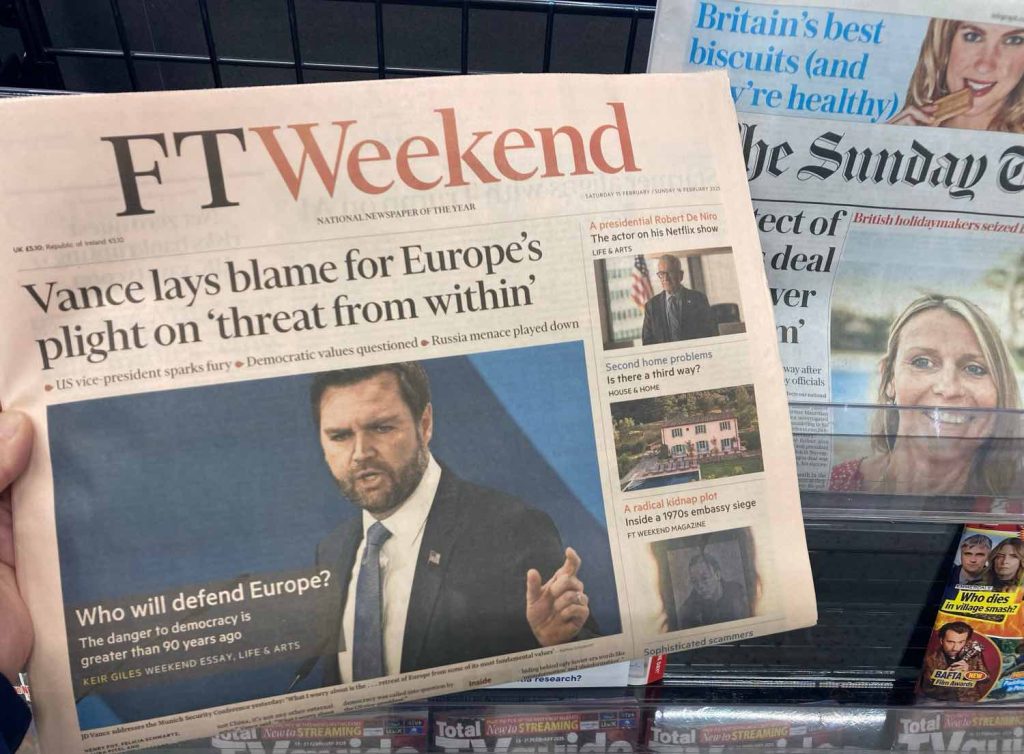
This diversity was Europe’s quiet richness. Different, but comprehensible. Neighbours who disagreed, but who ultimately shared enough — a common civilisational inheritance, centuries of shared history, a broadly similar understanding of law, of individual rights, of the relationship between men and women — to make coexistence natural.
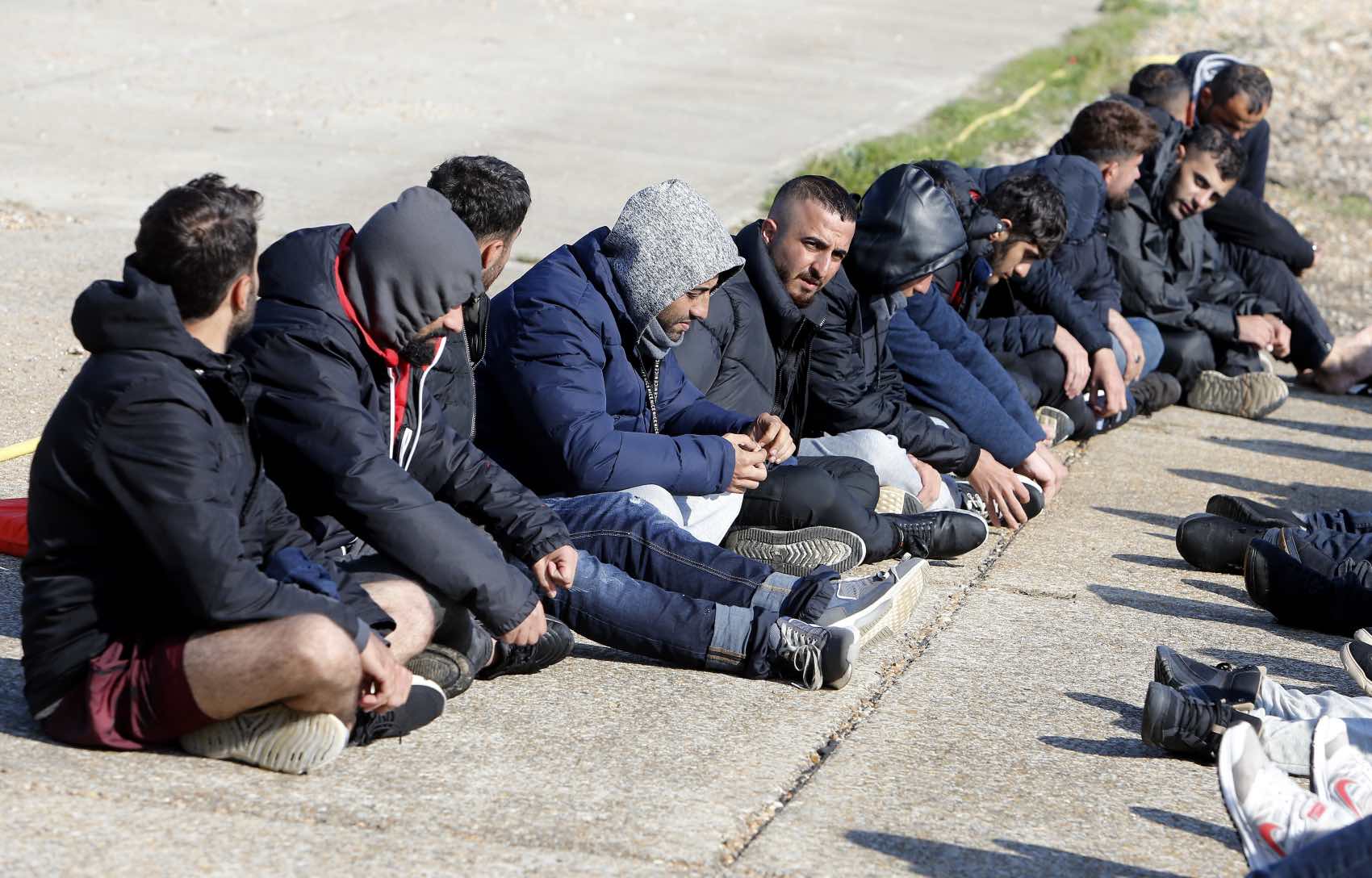
The mass migration of the past decade — accelerating sharply after 2015 — introduced something qualitatively different. Not the movement of individuals assimilating gradually into host societies, but the rapid arrival of large populations from cultural backgrounds with fundamentally different values concerning women’s autonomy, the role of religion in public life, attitudes toward homosexuality, and concepts of law and loyalty.
Europeans noticed – not through statistics, but through lived experience: changed neighbourhoods, schools where teachers struggled with children who spoke no common language, public spaces — parks, swimming pools, train stations — where behaviour had visibly changed. Women in cities across Germany, Sweden, France and the Netherlands reported feeling less safe.
Crime statistics in Sweden, once one of the safest countries on earth, began telling a story that Swedish authorities were reluctant to tell themselves. Gang violence, grenade attacks, shootings in suburbs of Malmö, Gothenburg and Stockholm. Result; the failure to integrate large populations who arrived without language, without qualifications, and sometimes without any intention to become Swedish.
In Germany, the events of New Year’s Eve 2015 in Cologne — where hundreds of women were sexually assaulted in coordinated attacks. This was not an isolated incident. It was a signal that institutions were more afraid of being called racist than of telling the truth to the people they served.
In Belgium, parts of Molenbeek became effectively ungovernable. In the UK, grooming gang scandals in Rotherham, Rochdale, Telford and elsewhere — where thousands of working-class girls were abused over decades while authorities looked the other way — represented a catastrophic failure in which political cowardice cost children their safety and their futures.
The Reality. The economic argument for mass migration — that ageing European populations need workers — deserves honest scrutiny rather than reflexive acceptance. The question is not whether Europe needs labour. It does. The question is what kind of migration, from where, on what terms, and with what expectations.
Integration costs money: language training, job placement, housing, social services. Where it did not happen, the costs were higher still: welfare dependency, parallel societies, the long-term expense of policing failure. The honest accounting has rarely been done.
The Failures. Survey after survey across EU member states shows majorities — often large majorities — in favour of stricter border controls, reduced migration levels, stronger requirements for integration, and faster deportation of those who commit crimes or fail to integrate.
For years, these views were not represented in government. The result was predictable: voters moved to parties willing to say what the mainstream would not. The rise of parties across Europe — from Sweden Democrats to Brothers of Italy, from the RN in France to PiS in Poland, from Fidesz in Hungary to the AfD in Germany — was not a collective European descent into fascism. It was an electorate demanding to be heard.
Even the European Commission, long an enthusiast for open borders, has shifted its language. The failures are no longer deniable.
Different Model. Poland and Hungary made a choice: they refused to accept quotas for migrants from the Middle East and Africa. Not a reduced quota. Not a negotiated compromise. Zero. Brussels threatened, fined, and condemned. Their populations largely approved.
The results are observable. Poland and Hungary have not experienced the gang violence of Malmö, the banlieue riots of Paris, the grooming scandals of English towns, or the mass sexual assaults that shocked Germany and Austria. Whether Western European politicians are willing to draw the obvious conclusion remains another matter.
Poland’s situation has a further dimension – they absorbed 1.5 million Ukrainian refugees after Russia’s full-scale invasion in 2022. Poles did this not because of EU directives but because Ukrainians were neighbours, culturally close, historically connected. Poland’s government has been clear: this is temporary protection, not permanent settlement. When peace returns to Ukraine, the Ukrainians return to Ukraine. In most of the world, it is simply common sense.
Return to the Family. Europeans of all backgrounds — Nordic, Mediterranean, British, Eastern — organise their lives around it. What mass migration disrupted was not merely statistics or policy frameworks. It disrupted the human geography of communities: the sense that your neighbourhood is yours, that the school your children attend has shared values, that the public space around you is governed by norms you understand and that others respect.
That disruption was real. It was felt by real people. And dismissing the people who felt it as ignorant, racist, or frightened has been one of the great political failures in Europe.
Europe is not ending. But it is changing in ways its populations did not vote for and were not asked about. The legitimate question is what kind of Europe emerges.
Europe that controls its borders is not a Europe that closes itself to the world. It is a Europe that decides, democratically, who comes, in what numbers, and on what terms.
A Europe that demands integration is not a Europe that refuses diversity. It is a Europe that says: if you come here, you come to participate in a society with values — equality between men and women. This is not colonialism in reverse. It is the minimum condition of cohesion.
The old diversity of Europe — Nordic and Mediterranean, Catholic and Protestant, collective and individual, rural and urban — was managed over centuries through proximity, intermarriage, trade, war, and eventually law. It produced a recognisable civilisation. The new diversity, arrived rapidly and largely unmanaged, has produced fracture.
Europeans are not wrong to want their institutions to work, their streets to be safe, and their cultures to survive. They are not wrong to ask whether the pace and scale of change they have experienced was ever in anyone’s interest — including the migrants who arrived societies that were unprepared and unwilling to receive them.
Deportation. The honest conversation, about what was lost, what failed, and what kind of Europe is still possible, has barely begun. It can only happen if ordinary Europeans are allowed to speak without being accused of hatred for doing so. Europe is not ending, but arrival of more migrants has come to an end. From now it will all be about deportation of migrants.
This text presents the perspective widely held among ordinary European citizens as documented in polling across EU member states. It does not represent the author’s personal endorsement of any political party.


