

One local puts it perfectly: “We’re helpful, but in a hurried, city way. Don’t expect long chats.”
SPANISH WELCOME: Friendly or not so friendly – that is the question! Think of Spain as a platter of friendship. Andalucía serves up warmth with the intensity of midday August sun. Galicia offers care so subtle you might miss it entirely. And Catalonia..? Well, let’s just say the relationship status is complicated. Welcome to the wild, wonderful world of Spanish social customs, where understanding regional personalities is as essential as knowing your jamón from your chorizo.

Spain doesn’t do friendship with a one-size-fits-all approach any more than it serves the same paella from Barcelona to Bilbao. Friendliness in Spain is complicated and expect the welcome to be fiery, frosty, and everything between.
Andalucía doesn’t just welcome you—it practically adopts you. Málaga leads the charge with locals so warm that some visitors genuinely wonder if there’s such a thing as too friendly.
In Seville, the concept of personal space takes a siesta. Life happens on the streets, conversations multiply like rabbits, and you’ll find yourself invited to things before you’ve finished your first caña. The Andalusian philosophy is simple: Why be reserved when you could be celebrating?
Granada sweetens the deal literally—free tapas with every drink isn’t just tradition, it’s a friendship contract written in olive oil and generosity. Cádiz brings coastal humor to the mix, where locals joke with strangers as naturally as they breathe salt air. Down here, warmth isn’t performed—it’s simply how life works.
The Madrid Secret. Finding a true-born “gato” – the nickname for locals, meaning “cat” – with four Madrid-born grandparents is harder than finding parking in Malasaña. Nearly everyone’s from somewhere else, creating a city that’s surprisingly welcoming for a European capital.
But Madrid operates on a split personality schedule that confuses the uninitiated. Morning through evening? Efficient, brisk, getting-things-done energy. One local puts it perfectly: “We’re helpful, but in a hurried, city way. Don’t expect long chats.”
When the sun sets, Madrid transforms like a social werewolf. Suddenly, those hurried Madrileños become your new best friends at the tapas bar. They’ll talk for hours about their city, debate the best churros, and refuse to let you pay for the next round. As another local explains: “Our friendliness comes out at night. Join us for tapas, then you’ll see how social we are.”
The lesson? Time your social expectations accordingly. Need directions at noon? You’ll get them—quickly. Want to understand the soul of Madrid? Meet them after sunset with wine and olives.
The Catalonian Way. “Welcome to Spend, Just Don’t Expect Christmas Invitations”Barcelona serves up cosmopolitan charm with a side of emotional distance. It’s the friend who’s lovely at parties but never quite opens up completely. Long-term expats describe the Catalan social code this way: “You’re welcome to live here, especially with money to spend, but don’t expect to become one of the family.”
The eastern coast shares this pattern—pleasant, easygoing on the surface, yet maintaining a certain reserve. Decades of tourism haven’t made locals warmer; if anything, they’ve reinforced protective boundaries. Think of it as professional friendliness: courteous, functional, rarely transcendent.
Northern Surprises. Asturias proudly claims the title “Andalucía of the north”—all that southern warmth but with mining-region grit. Picture your friendliest friend who also knows how to fix your car and isn’t afraid of hard conversations. The warmth is genuine, just delivered with more calluses.
The Basque Country takes honesty to an art form. Basques don’t do small talk for sport. They’re direct, solid, and refreshingly straightforward—what you see is exactly what you get. Some travelers find this bracing; others call it perfect hospitality. Either way, you’ll never wonder where you stand.
Then there’s Galicia, the introvert’s paradise. Galicians guard their inner lives like treasure, so reserved you might initially mistake them for unfriendly. But watch what they do rather than what they say. You’ll find yourself cared for with quiet attentiveness that puts flashier hospitality to shame. They won’t tell you they like you—they’ll just ensure your glass never empties and you’re never truly lost.
Small Towns win big on warmth. Smaller cities often crack the friendship code most easily. Salamanca buzzes with university energy that welcomes newcomers like old friends. Santiago de Compostela has been perfecting the art of hospitality for centuries – when your city identity revolves around welcoming pilgrims, you learn a thing or two about making strangers feel at home.
Valencia blends Mediterranean sociability with festival fever. During Las Fallas, the entire city becomes one massive, firework-filled party where everyone’s invited. It’s like the whole population decided that life’s too short for social barriers.
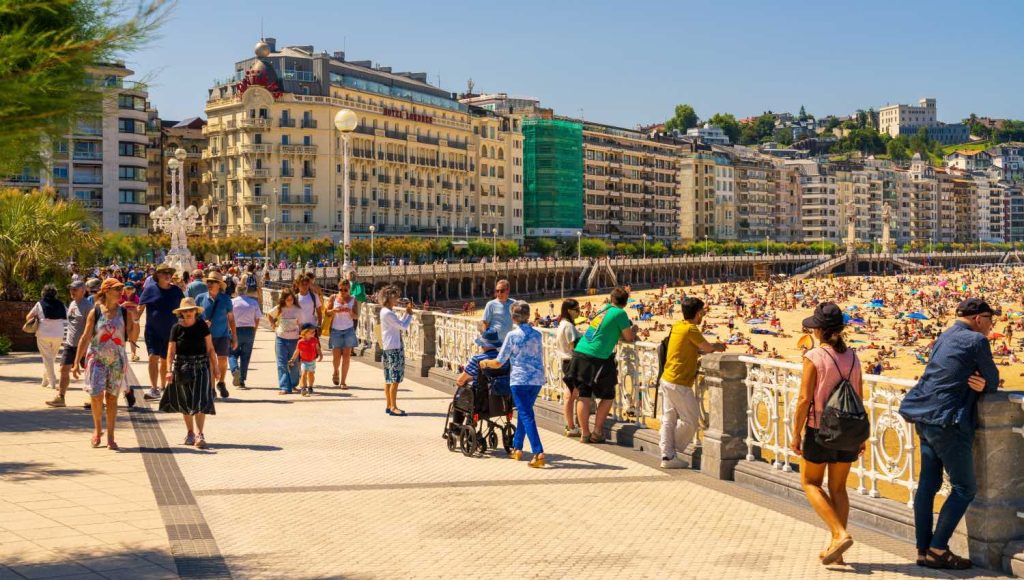
The Tourism Tension. Not every destination rolls out the welcome mat with equal enthusiasm. Recent surveys identified Santa Cruz de Tenerife as having particularly frayed patience with visitors, followed by parts of Granada, Alicante-Elche, and San Sebastián. Overtourism has created genuine friction in these communities, where locals feel priced out of their own neighborhoods while seeing few benefits from the tourist economy.
The Spanish Friendship Code. Here’s the real secret to Spanish hospitality: it has nothing to do with where you go and everything to do with how you show up.
Spaniards have a finely tuned radar for condescension. Treat people like service workers in a hierarchy, and you’ll meet Spain’s legendary stubbornness. Act superior, and you’ll discover exactly how much pushback a proud culture can generate. Want superficial politeness and endless apologizing? Stay in England (their words, not ours).
But arrive as an equal—ready for honest conversation, comfortable with directness, and open to emotional authenticity—and Spain reveals its true face. Spanish friendship isn’t polite; it’s passionate. It isn’t reserved; it’s real. And it certainly isn’t easy to earn, but once you’ve got it, you’ll wonder why you ever settled for less.
The question was never whether Spanish people are friendly. The real question is: Are you ready to be friends the Spanish way? Because once you say yes, you’re in for life – or at least until the bar closes. And in Spain, the bar stays open late.
Conclusion: Don’t call Spaniards friendly until you know which Spain you’re in. Spain´s hospitality has two faces: Warm Hearts and cold shoulders!


